


TAYKO sevilla
The building
A chapter from 1928 at the Puerta de Jerez
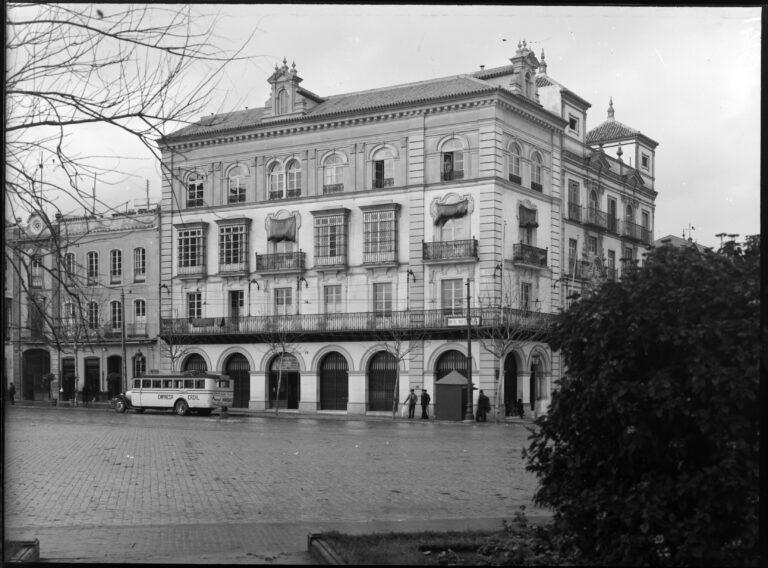
Every Tayko hotel begins with a building that has a story to tell. The one in Seville stands at the Puerta de Jerez, the gateway through which, for centuries, people entered the city from the river, with the Torre del Oro, the Real Alcázar and the Cathedral as its neighbours.
The building forms part of the historic site of the former Royal Mint, where silver arriving from the Americas was minted, and was designed in 1928 by José Gómez Millán, one of the leading figures of Andalusian regionalist architecture. It was built during the most ambitious period of modern Seville: the urban transformation brought about by the 1929 Ibero-American Exposition, the very same event that gave the city the Plaza de España and the María Luisa Park. This building and those monuments are the products of the same year and the same impetus.
Every Tayko hotel begins with a building that has a story to tell. The one in Seville stands at the Puerta de Jerez, the gateway through which, for centuries, people entered the city from the river, with the Torre del Oro, the Real Alcázar and the Cathedral as its neighbours.
The building forms part of the historic site of the former Royal Mint, where silver arriving from the Americas was minted, and was designed in 1928 by José Gómez Millán, one of the leading figures of Andalusian regionalist architecture. It was built during the most ambitious period of modern Seville: the urban transformation brought about by the 1929 Ibero-American Exposition, the very same event that gave the city the Plaza de España and the María Luisa Park. This building and those monuments are the products of the same year and the same impetus.
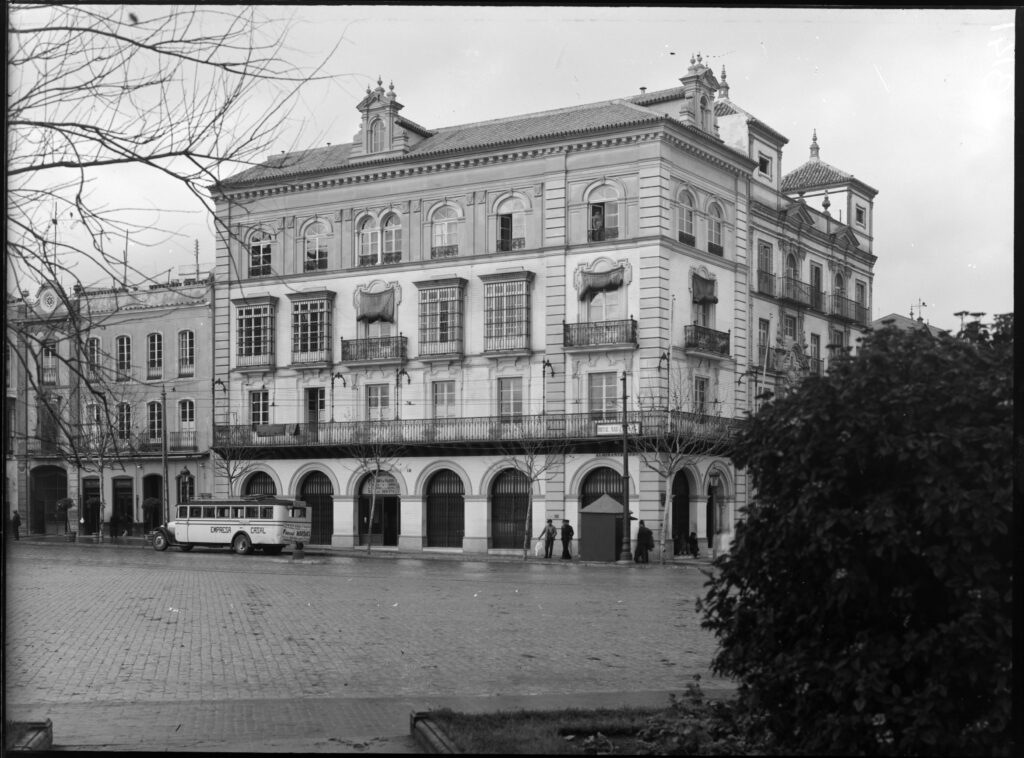
Regionalism was Seville’s response to the architecture of its time: rather than importing styles, it reinterpreted its own. Exposed brick, glazed ceramics, wrought-iron balconies, restrained ornamentation. Materials the city had been working with for centuries, put at the service of a new architecture. Our building preserves this architectural language in its façade and its overall appearance, and that is why it does not disrupt the monumental landscape that surrounds it: it speaks the same language as the city, because it was built using that very language.
Regionalism was Seville’s response to the architecture of its time: rather than importing styles, it reinterpreted its own. Exposed brick, glazed ceramics, wrought-iron balconies, restrained ornamentation. Materials the city had been working with for centuries, put at the service of a new architecture. Our building preserves this architectural language in its façade and its overall appearance, and that is why it does not disrupt the monumental landscape that surrounds it: it speaks the same language as the city, because it was built using that very language.
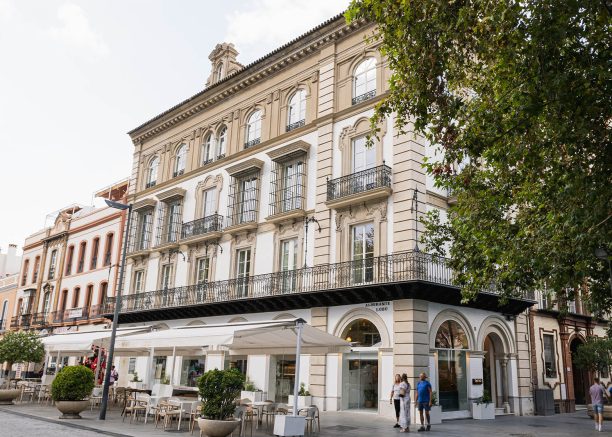
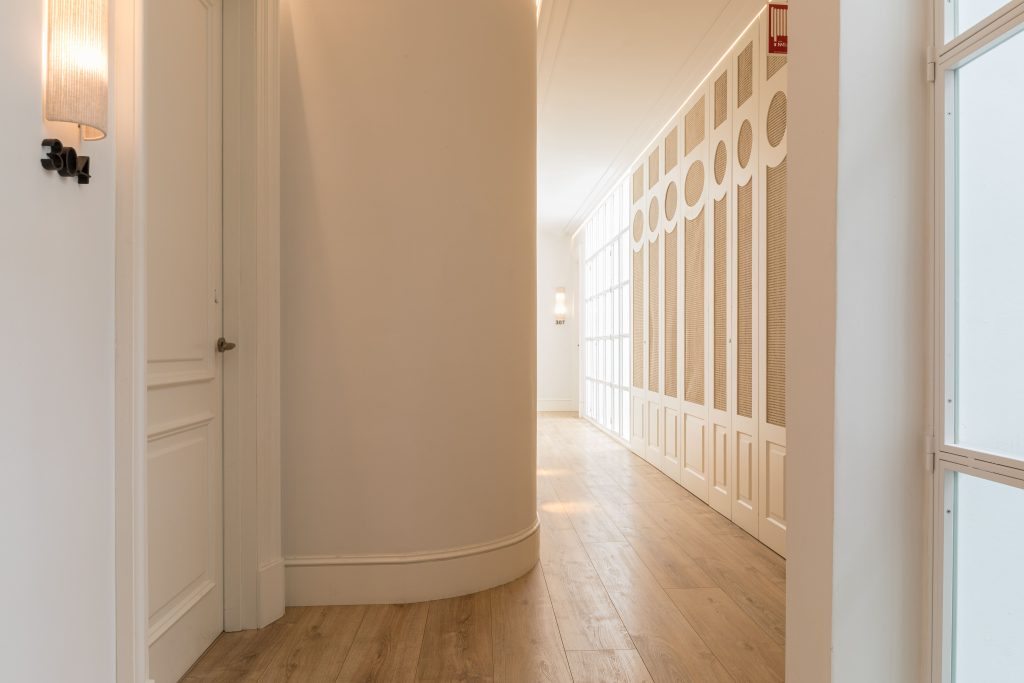
Turning the building into a hotel was, above all, an exercise in respect for the brickwork, the ceramics and the legacy of 1928. The restoration preserved the original architectural identity, the structure, the façade and the elements that define its character, whilst incorporating a contemporary, light-filled and serene interior, designed for relaxation and to allow the building to remain the centre of attention. We didn’t invent anything: we made ourselves at home in what was already there and told its story anew. This is the Tayko way of understanding the hotel industry, in Seville and in every city where we open our doors.
From its windows and its doorway, the building tells the story of Seville’s urban history better than any map: on one side, the historic centre and its three World Heritage monuments; on the other, the Guadalquivir, the river that made the city the capital of the world. Staying here means occupying that crossroads and taking in the city from the very spot where people have always entered it.
Turning the building into a hotel was, above all, an exercise in respect for the brickwork, the ceramics and the legacy of 1928. The restoration preserved the original architectural identity, the structure, the façade and the elements that define its character, whilst incorporating a contemporary, light-filled and serene interior, designed for relaxation and to allow the building to remain the centre of attention. We didn’t invent anything: we made ourselves at home in what was already there and told its story anew. This is the Tayko way of understanding the hotel industry, in Seville and in every city where we open our doors.
From its windows and its doorway, the building tells the story of Seville’s urban history better than any map: on one side, the historic centre and its three World Heritage monuments; on the other, the Guadalquivir, the river that made the city the capital of the world. Staying here means occupying that crossroads and taking in the city from the very spot where people have always entered it.